



What Makes a Master-Planned Estate Different From a Typical Residential Estate?
In this guide, I’ll explain the differences in practical terms, what buyers should actually check before paying, and how a development like Hutu Exclusive fits into the master-planned model without assuming that every feature on a long-term master plan is already complete today.
By Amaka Okorie, Hutu Exclusive Property Advisor · Updated: September 2026
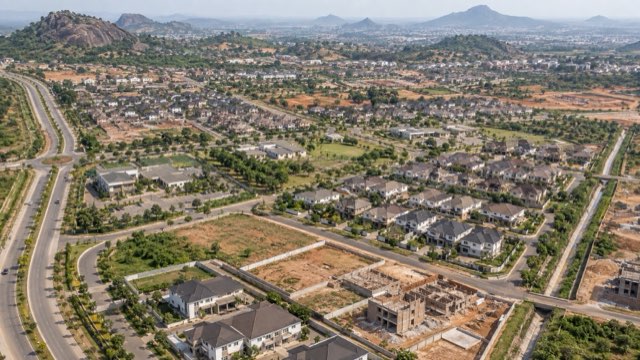
The phrase “master-planned estate” is used a lot in property marketing, but it is not always explained well. At a glance, a master-planned estate and a typical residential estate may both have houses, roads, a gatehouse and security. The real difference is in how the wider community is planned before individual plots and buildings begin to fill it.
A typical residential estate can be perfectly suitable for a buyer who simply wants a secure place to build or live. A master-planned estate is usually trying to do something broader: organise homes, commercial activity, recreation, roads, utilities, green spaces and community services within one coordinated development plan.
That distinction matters because the type of estate you buy into affects more than the look of the entrance gate. It can influence how traffic moves through the development, where commercial activity happens, where utilities are routed, how amenities are positioned and how easy it is for the estate to grow without becoming disorganised.
In this guide, I’ll explain the differences in practical terms, what buyers should actually check before paying, and how a development like Hutu Exclusive fits into the master-planned model without assuming that every feature on a long-term master plan is already complete today.
The simple difference
A typical residential estate is mainly organised around plots or homes. A master-planned estate is designed as a wider community, with residential, commercial, recreational, service and infrastructure needs considered together from the start.
01
What is a master-planned estate?
A master-planned estate is a large residential development designed around an overall land-use plan rather than being built one street or one cluster at a time without a coordinated framework.
Before the estate is fully developed, the master plan identifies how different parts of the land are expected to be used. Residential zones may be separated from commercial areas. Roads are planned to connect different neighbourhoods. Spaces may be reserved for recreation, schools, healthcare, utilities, security and other community functions.
The important point is not that every master-planned estate must contain the same amenities. It is that the development is being planned as a system rather than as a collection of unrelated plots.
02
How is that different from a typical residential estate?
A typical residential estate may focus mainly on creating serviced plots or housing units within a gated environment. It may still have good roads, drainage, security and a few shared amenities, but the estate does not necessarily need to function as a complete mixed-use community.
That is not automatically a weakness. For some buyers, a smaller and simpler estate is exactly what they want. The difference is in the scale and level of coordination.
Typical residential estate compared with a master-planned estate
| What to compare | Typical residential estate | Master-planned estate |
|---|---|---|
| Primary focus | Homes or plots within a defined estate | A wider community with multiple coordinated uses |
| Land use | Mostly residential | Residential plus planned commercial, recreation and community services |
| Roads & circulation | Roads serve the immediate estate | Road hierarchy is planned around movement across a larger development |
| Amenities | Often a smaller set of shared facilities | Amenities may be distributed across neighbourhoods or districts |
| Commercial activity | May sit outside the estate or be added later | Often allocated to planned commercial zones |
| Utilities | Can be estate-wide, but scale is usually smaller | Infrastructure is planned to serve a larger integrated community |
| Growth | Expansion may be limited by the original estate footprint | Development is often delivered in phases within one broader plan |
03
1. Land use is planned before the neighbourhood fills up
One of the biggest differences is zoning. In a master-planned development, the developer typically decides in advance which areas are intended for homes, commercial uses, recreation, utilities, schools, healthcare and other functions.
This reduces the likelihood of completely incompatible uses appearing beside one another later. A busy commercial area, for example, can be positioned where it is accessible without placing the same level of traffic directly inside quieter residential streets.
For a buyer, this means the estate layout matters. Do not look only at your individual plot. Ask what is planned around it.
04
2. Roads are part of a wider movement plan
In a smaller estate, the internal road network may simply connect the entrance to the residential streets. A larger master-planned development has to think about movement at a different scale.
There may be primary roads carrying traffic through the estate, secondary roads serving neighbourhoods and smaller streets serving individual clusters. Commercial areas, schools and major amenities also need to be positioned so that movement does not become chaotic as the population grows.
This is one reason an attractive site plan is not enough on its own. Buyers should pay attention to how access roads, internal roads and future traffic are expected to work.
05
3. Infrastructure has to serve more than individual houses
A master-planned estate has to think about the systems beneath and around the buildings: drainage, water, electricity, waste management, street lighting, security infrastructure and the way those systems will scale as more residents move in.
Good infrastructure planning does not mean buyers should assume everything is already installed. It means the development has a coordinated infrastructure concept that can be delivered as the estate progresses.
06
4. Amenities are part of the community plan, not just decoration
In many ordinary estates, an amenity may be one pool, one playground or one clubhouse added to make the development more attractive. In a larger master-planned estate, recreation can be woven into the wider layout through parks, sports facilities, green areas, leisure spaces and other shared destinations.
The value of that approach is not the number of amenities listed in a brochure. It is whether the facilities have a clear place in the development and whether residents can realistically access them as the estate grows.
This is also where buyers need to separate the master plan from current reality. A planned amenity is not the same as a completed amenity.
07
5. Commercial areas are planned instead of appearing randomly
Large residential communities eventually need shops, services and other commercial activity. If those uses are not planned, they often begin appearing wherever space is available, which can create traffic, noise and inconsistent land use.
A master-planned estate can allocate specific commercial zones or shopping areas from the beginning. That gives the community room for everyday services while helping protect the character of residential streets.
08
6. Community services can be built into the wider development
Depending on the scale of the estate, the master plan may reserve land for schools, healthcare, security, places of worship or other community services. Again, the exact mix differs from one development to another.
The important distinction is that the developer has thought beyond the sale of individual plots and considered what a larger population may eventually need.
09
7. Development is usually phased
A large estate cannot normally be delivered all at once. Master-planned developments are often divided into phases so the developer can open different parts of the estate over time.
That means two buyers in the same overall estate can have very different experiences depending on the phase they choose. One phase may have more visible infrastructure or a different mix of property types, while another may have a lower entry price but be earlier in its development cycle.
This is why phase selection matters just as much as the name of the estate itself.
Hutu Exclusive is a useful example. If you are comparing its current residential phases, see my Phase 1 & 2 vs Phase 3 vs Phase 5 comparison for the differences in pricing, property options and payment timelines.
10
8. The master plan helps you understand the long-term vision, not the current completion stage
This is probably the most important point for buyers. A master plan shows what the developer intends the estate to become. It should not be read as proof that every road, amenity, lake, school, commercial space or leisure facility already exists.
When reviewing a master-planned estate, separate the long-term vision from current site progress. Ask what has been completed, what is under development and what remains part of a future phase.
A current inspection, dated site photographs and recent project updates are much more useful for understanding today's reality than a rendered image alone.
Before you buy
Ask two separate questions: “What is planned for this estate?” and “What can I see on site today?” A good buying decision needs both answers.
Want to see how this applies on site?
11
How Hutu Exclusive fits the master-planned model
Read: Hutu Exclusive Golf Resort Estate: What the Master Plan Includes & What Buyers Should Know →Hutu Exclusive is being developed as a large integrated residential community on Abuja’s Airport Road axis. The wider master plan combines residential property with golf, artificial lakes, sports and recreation, commercial areas and supporting community infrastructure.
Its residential inventory is spread across different phases, while the broader development plan belongs to the estate as a whole. That is a good example of why a master-planned development should be viewed at two levels: the individual property you are buying and the wider community that property sits within.
If you want the Hutu-specific breakdown of the wider estate vision, including the two golf courses, artificial lakes, sports facilities, commercial areas and infrastructure, read my Hutu Exclusive master-plan guide.
12
Does a master-planned estate automatically make a better investment?
No. A more ambitious master plan does not automatically make a property the better purchase.
The plan is only one part of the decision. You still need to look at the developer, location, price, property type, payment terms, documentation, development stage and whether the specific property fits what you are trying to achieve.
A well-planned development can be attractive because the estate has a clearer long-term structure, but that does not remove normal property-buying risks or guarantee a particular resale value.
13
What should you check before buying in a master-planned estate?
The actual master plan:
Understand where your property sits in relation to roads, commercial zones and major amenities.
Your exact phase or neighbourhood:
Large developments can be at different stages in different areas.
Current site progress:
Compare the long-term plan with what is physically visible now.
Infrastructure:
Ask what has been delivered and what is still planned.
Property rules:
Check the approved prototype, setbacks, building guidelines or other development controls that apply.
Price and payment terms:
A strong master plan does not make an unsuitable payment plan affordable.
Developer and documentation:
Know who is developing the estate and confirm the paperwork for the exact property you intend to buy.
If you are considering Hutu Exclusive specifically, my Is Hutu Exclusive Right for You? guide walks through the wider buying decision before you commit.
14
Who may prefer a typical residential estate instead?
A master-planned community is not automatically right for every buyer. You may prefer a smaller traditional estate if your main priority is a simpler environment, a smaller development footprint, fewer shared facilities or a property that is already surrounded by an established neighbourhood.
Some buyers also prefer developments where most of the infrastructure and community already exist rather than waiting for a larger phased estate to mature.
The right choice depends on what you value, how soon you want to use the property and how comfortable you are buying into a longer development timeline.
15
Frequently asked questions
What does master-planned estate mean?+
It means the estate is designed around an overall land-use plan that coordinates residential areas with roads, infrastructure, amenities, commercial spaces and other community functions.
Is a master-planned estate the same as a gated estate?+
No. A gated estate simply controls access to a residential area. A master-planned estate refers to how the wider development is organised. A master-planned estate can also be gated.
Are master-planned estates always more expensive?+
Not necessarily. Prices depend on location, developer, phase, property type, plot size and development stage. A large planned estate can contain both lower-entry and premium options.
Are all amenities in a master plan already available?+
No. A master plan shows the intended long-term development. Buyers should separately verify what is completed, what is under development and what belongs to future stages.
Can a master-planned estate have commercial property?+
Yes. One of the advantages of planning at a larger scale is that commercial areas can be deliberately positioned instead of appearing randomly within residential streets.
Is Hutu Exclusive a master-planned estate?+
Yes. Hutu Exclusive is being developed as an integrated residential community with multiple residential phases, commercial areas, recreation, golf, artificial lakes and supporting infrastructure within a wider estate plan.
16
The question to ask is not simply “Which type is better?”
A master-planned estate gives you a clearer picture of how a large community is intended to function over time. A typical residential estate may offer a simpler, smaller and more established environment. Either can be the right choice.
The better question is: which type of development fits the way you want to live, build, invest or hold property, and does the specific property make sense at the price you are being asked to pay?
If you are considering Hutu Exclusive and want help comparing the current phases, property options or development stage, I can help you work through those details before you make a decision.
About the author

Amaka Okorie
Hutu Exclusive Property Advisor
Amaka Okorie is a Hutu Exclusive Property Advisor based in Abuja. Since the estate launched in 2024, she has helped more than 20 clients navigate Hutu Exclusive and handled more than ₦500M in Hutu Exclusive property sales. Her focus is clear information, honest guidance and personal follow-through before and after payment.